
News
France vs Springboks: Eight Player Battles That Could Decide the Paris Test
Ox Nché meets Sipili Falatea, Malcolm Marx takes on Julien Marchand, and Sacha Feinberg-Mngomezulu faces Antoine Dupont at flyhalf. Eight compelling contests put the scrum, gain line and battle for space at the heart of another heavyweight night in Paris.
 Fact checked by
Amy Clark Managing Editor

A single point ended France’s home World Cup against the Springboks at this ground. Three years on, Friday night’s meeting at Stade de France offers another chance to beat the side that ended that dream, with a French pack built to meet South Africa on its strongest ground.
The front rows alone justify staying up for the 22:10 SAST kick-off, live on SuperSport. Add Jasper Wiese against Grégory Alldritt and the extraordinary prospect of Antoine Dupont wearing No 10 opposite Sacha Feinberg-Mngomezulu, and this Nations Championship Test has contests worth watching well beyond the scoreboard.
Paris remembers the one-point defeat
Our France vs Springboks match preview covers the teams and wider stakes. The fascination here lies in how those selections collide, and how much time the forwards can buy their playmakers.
South Africa’s 29–28 quarter-final victory in 2023 still supplies the emotional backdrop. France had more possession and territory, yet the Boks made their opportunities count. World Rugby’s review also identified the disruption of French ruck ball, a warning that remains relevant to Friday’s halfbacks.
Siya Kolisi acknowledged France’s hurt this week while dismissing the suggestion that history gives South Africa a mental advantage. He spoke warmly of the anthems and home support. Both countries understand the pleasure of seeing their pack drive forward; neither will readily accept being pushed backwards here.
Eight battles that could shape the Test
The contests feed into one another. A prop’s foothold can improve a scrumhalf’s evening, while a loose forward’s cleanout can give his flyhalf time to beat the rush.
Ox Nché vs Sipili Falatea
Nché against Falatea is the scrum contest to settle in for. The Bok loosehead’s compact position and ability to keep driving through contact present a demanding examination of Falatea’s stability on France’s tighthead side.
Falatea needs a secure bind and a body position he can hold once the shove develops. If his hips drift or his chest rises, Nché can build pressure through that loss of shape. For Nché, the challenge is to sustain a legal, connected drive without losing his own balance in pursuit of the penalty.
“They love the scrum,” Nché said in SA Rugby’s pre-match interview. He also admitted the Boks had lost cohesion against Italy. France will test whether that has been repaired. Each penalty could put South Africa within a touch-finder of an attacking maul.
Wilco Louw vs Jean-Baptiste Gros
Across the scrum, Louw has to anchor South Africa’s right side while putting Gros under pressure. A tighthead absorbs force through both shoulders; staying square and connected to Marx is essential if the Boks want the pressure on Nché’s side to travel through the pack.
Gros can make life uncomfortable by establishing his height early and driving straight through Louw’s outside shoulder. If he forces Louw to retreat, South Africa’s entire scrum must adjust, including Wiese’s control at the base.
Louw’s promotion, covered in our Springbok team announcement, leaves Thomas du Toit ready to follow. That gives Erasmus another experienced tighthead, although France’s replacement loosehead Rodrigue Neti will arrive with his own chance to change the contest.
Malcolm Marx vs Julien Marchand
Marx and Marchand have work to do before either can hunt a turnover. Their throwing must survive pressure from opposing jumpers, while hooking cleanly requires support from both props. An attacking lineout lost five metres out wastes the pack’s work getting there.
Marx’s threat over the ball also creates a decision for France’s cleaners: arrive early enough to remove him without committing so many men that the next phase becomes predictable. Marchand can ask the same question of South Africa when a carrier gets separated from his support.
At maul time, the detail is in the transfer and protection of the ball. Poor alignment can leave either hooker stranded. Peato Mauvaka and Jan-Hendrik Wessels will inherit those responsibilities when they replace the starters, alongside the carrying and tackling that keep the pack functioning between set pieces.
Jasper Wiese vs Grégory Alldritt
Wiese’s direct carrying gives South Africa a way to force France’s defence to stop and reset. His most valuable metres may be the short ones through contact that let Van den Berg collect the ball before the French line has reformed.
Alldritt brings his own heavy work, with the hands to connect a carry to the next runner. South Africa must complete the tackle and account for the support player. Committing two defenders to stop him achieves little if he frees the ball before going down.
Both No 8s need help. Kolisi and Pieter-Steph du Toit must reach Wiese’s carries in time to protect possession; François Cros and Cameron Woki have the equivalent task for France. At the scrum base, either eight may also have to rescue awkward ball before his scrumhalf can use it.
Morné van den Berg vs Maxime Lucu
Van den Berg arrives after a Player of the Match performance in the 66–7 win over Italy. Paris will ask more of his judgement, particularly when a quick pass is available but the receiving player has a defender waiting for him.
“Krappies” can lift the pace through sharp service and support running. His kicks need enough height and the right distance for the chase to contest, rather than deliver possession to France’s back three with room to accelerate.
Lucu’s kicking and control offer France a way out when the Boks squeeze them. He must also recognise when Dupont moves towards the ruck and take over at first receiver. That exchange can unsettle defenders, provided France preserve their width and someone remains available to organise the next phase.
Sacha Feinberg-Mngomezulu vs Antoine Dupont
Feinberg-Mngomezulu can hurt France by taking the ball close enough to the defensive line to make a tackler commit. From there, his running threat keeps the inside defence interested while his pass can release De Allende or reach a wider runner. The difficulty is choosing the moment before pressure takes those options away.
Dupont will see the field from a different starting position. At ten, he can scan beyond the ruck, challenge an inside shoulder or kick behind advancing centres. His strength through contact makes a hurried tackle particularly dangerous: allowing him to stay upright can give France another passing opportunity.
Kolisi and assistant coach Mzwandile Stick expect Dupont and Lucu to exchange roles. A defender following Dupont towards the breakdown could leave Lucu with space outside. South Africa need to communicate through those movements and keep pressure on the ball.
“Our system doesn’t change for any team we play against,” Kolisi said. Sending carriers towards Dupont’s channel could test France’s defensive organisation, but chasing that matchup too insistently risks ignoring space elsewhere. Sacha faces the same practical demand: exploit what the defence offers, then kick accurately when it closes.
Damian de Allende vs Yoram Moefana
De Allende’s ability to carry through a crowded midfield can give South Africa a reliable route forward when the wider attack is covered. Moefana has the physicality to contest that space and the handling to bring Gourgues into play before the Boks can close around him.
The danger for both defences is overcommitting. If France crowd De Allende, a well-timed release can give Jesse Kriel a defender’s outside shoulder. If South Africa narrow too far around Moefana, Dupont and Lucu can work towards the space they’ve left.
Kriel’s communication with De Allende will be especially important as France change their first receiver. The centres must advance together without opening a passing lane between them, while Gourgues needs to choose when to straighten rather than simply transfer pressure towards his wing.
Kurt-Lee Arendse vs Louis Bielle-Biarrey
South Africa’s right wing and France’s left wing occupy opposing edges, where a loose kick or a missed tackle can undo several minutes of forward pressure. Arendse’s timing onto a pass and Bielle-Biarrey’s acceleration make the space behind the defensive line particularly inviting.
Their work without the ball deserves equal attention. A wing pressing forward needs cover behind him; a wing dropping early can offer room for a pass in front. The kick-chase contest therefore involves Willemse and Attissogbe as much as the two finishers.
On the other edge, Ethan Hooker and Aaron Grandidier-Nkanang must stay connected to their inside defenders. France’s attacking kicks were a concern identified by Bok assistant Felix Jones this week. Arendse and Bielle-Biarrey could be at their most dangerous while everyone else is turning to chase.
The pressure must survive the replacements
Lood de Jager and Ruan Nortjé must deliver their drive through stable binds, with Florian Verhaeghe and Mickaël Guillard doing the same for France. A powerful prop can’t repair a pack pushing at different times. Those locks also carry the burden of securing lineout ball under pressure.
Both benches contain six forwards and two backs. Wessels, Gerhard Steenekamp and Thomas du Toit face Mauvaka, Neti and Régis Montagne as the front rows change. Behind them, Mostert, Hanekom and De Villiers must match the impact of Ollivon, Staniforth and Capilla. The timing of those changes could decide whether pressure continues or has to be rebuilt.
The Betting Read
We favour South Africa to win a close contest, with their established combinations and set-piece options providing the strongest case. France’s route to upsetting that view is clear: hold their scrum, protect Lucu’s service and make the Boks turn through accurate attacking kicks.
For the handicap and winning margin, distinguish sustained pressure from points actually scored. Three scrum penalties can produce a substantial territorial advantage while leaving the score close if the attacking lineout fails. France’s replacement forwards also give them resources to resist a late surge. A large Springbok margin needs more support than last weekend’s Italy score.
The total-points assessment depends partly on how penalties are used. Shots at goal keep the scoreboard moving; kicks to the corner create chances for maul tries but can also end in empty visits. An early spell of set-piece dominance alone is a poor reason to expect a low total when both teams have finishers who can score from one broken chase.
Our sports-betting hub explains comparing prices and settlement. For this Test, the attraction of backing the Boks depends on how much of their forward strength is already reflected in the price. Paris has supplied too many tight passages between these sides to treat French resistance lightly.

Welcome bonus
100% up to R10,000 + 100 Bonus Spins
New customers only. Deposit R100+ with code FIRST. 35x wagering on bonus and spin winnings. T&Cs apply. 18+.
Affiliate disclosure: StraightBet may earn a commission if you sign up through this link. This does not affect our editorial independence. 18+ only. Bet responsibly. Winners know when to stop. Get help and support.
18+ only. Betting carries risk, so keep it within your means. This guide is written for South African residents and refers to operators licensed by provincial gambling boards under the National Gambling Act. If gambling is taking a toll on you or someone you know, the National Responsible Gambling Programme helpline is free and open 24/7 on 0800 006 008, or text HELP to 076 675 0710. Winners know when to stop.
Featured Content
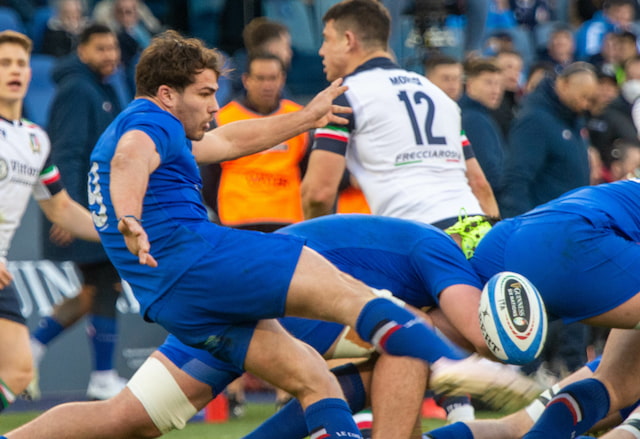
France vs Springboks: Eight Player Battles That Could Decide the Paris Test
A single point ended France's home World Cup against the Springboks at this ground. Three…
Swimming SA admits prize-money mistake after Tatjana Smith’s Dutch switch
Swimming South Africa has admitted it was wrong to withhold Tatjana Smith's prize money from…
Proteas vs Bangladesh First Test Preview: Nortje Returns for Highveld Challenge
South Africa vs Bangladesh 1st Test 2026 begins at the DP World Wanderers Stadium in…
Harry Kane Set to Break England Caps Record Against Croatia Tonight
Harry Kane is set to become England men’s most-capped player against Croatia tonight, with Thomas…